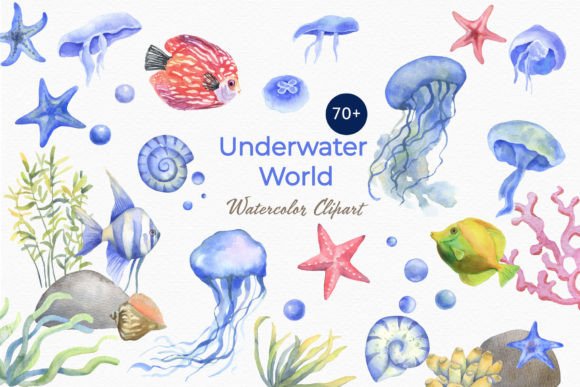
Jellyfish Sea Watercolor Clipart Ocean Illustrations
First Impressions: Evaluating Mood and Artistic Integrity
When sourcing assets for a recent rebrand of a boutique skincare line focused on marine hydration, I needed more than just generic ocean imagery. I was looking for a specific emotional resonance—something that felt organic, fluid, and premium. Upon reviewing the Jellyfish Sea Watercolor Clipart Ocean collection, my immediate assessment was positive regarding its painterly quality. Unlike many digital products that rely on harsh vector edges or repetitive AI artifacts, these illustrations possess the genuine unpredictability of traditional watercolor media. The pigment bleeds are natural, and the transparency layers mimic real wet-on-wet techniques.
For designers and brand owners, this distinction is critical. In modern design, consumers have become adept at spotting sterile, mass-produced graphics. This graphic design asset succeeds because it retains an artisanal imperfection that aligns perfectly with handmade business aesthetics and wellness branding. The color palette leans into soft cyans, deep indigos, and translucent whites, creating a calming visual rhythm. However, as with any creative design element, the true test lies not in how it looks in a preview thumbnail, but how it performs when integrated into a comprehensive commercial design strategy.
Application in Brand Identity and Packaging Design
In the context of the skincare project, I utilized these jellyfish illustrations primarily as secondary brand elements rather than primary logo marks. Watercolor textures can be notoriously difficult to reproduce at small scales required for logo design or favicon usage. Instead, this clipart excels in packaging design and marketing visuals where there is ample negative space to let the artwork breathe. On a 4oz glass dropper bottle label, the jellyfish served as a sophisticated background texture that added depth without competing with the typography.
For print-on-demand sellers and Etsy product creators, this asset offers significant versatility. I tested the files on both matte and glossy paper stocks. The high-resolution PNG design files maintained their integrity beautifully on textured cardstock for thank-you cards and unboxing experiences. For those working in sublimation design or creating t-shirt design concepts, the soft edges of the jellyfish blend seamlessly into fabric textures, avoiding the "sticker sheet" look that often plagues digital-to-print transfers. When used on tote bags or mugs, the organic flow of the tentacles guides the viewer’s eye around the product, enhancing the perceived value of the merchandise.
Digital Performance: Web Design and Social Media Graphics
Transitioning from print to screen, the Jellyfish Sea Watercolor Clipart Ocean collection proves equally valuable for web design and social media graphics. In editorial design for a client’s blog, I used individual jellyfish elements as section dividers and pull-quote accents. Because watercolor inherently suggests movement, it breaks up rigid grid layouts effectively. For Instagram posts and Pinterest pins, these illustrations provide instant thematic context. A simple flat lay photo of products becomes a cohesive campaign visual when anchored by these marine elements.
Canva template creators will find this bundle particularly useful. The isolated backgrounds allow for easy drag-and-drop functionality without complex masking. However, a word of caution for digital sellers: always ensure you are modifying the asset significantly if your license requires it. Simply placing the clipart on a blank canvas does not constitute a new creative work. I recommend combining these illustrations with custom typography, geometric shapes, or photography to create unique templates that stand out in a crowded creative marketplace.
Strategic Placement: Where the Asset Shines and Where to Pause
Understanding visual hierarchy is essential when deploying this type of illustration. The Jellyfish Sea Watercolor Clipart Ocean works best in large layout areas, hero graphics, and decorative accents. It thrives in designs that embrace whitespace and softness. Conversely, I would advise against using this asset in highly technical corporate materials, financial reports, or minimalist tech branding. The inherent softness of watercolor can undermine messages requiring precision, authority, or sharp data visualization.
Furthermore, be cautious with small-scale applications. At sizes below one inch, the delicate brushstrokes may muddy together, losing definition. This is not a failure of the asset, but a characteristic of the medium. If your project requires intricate detail at postage-stamp size, consider pairing this clipart with fine-line vector art instead. Similarly, avoid placing these translucent illustrations over busy photographic backgrounds without a solid overlay; the lack of contrast will destroy readability and visual trust.
Typography Pairings and Readability Checks
The success of this clipart often depends on font selection. During my testing, I found that elegant serif fonts complemented the traditional nature of the watercolor, reinforcing a luxury spa aesthetic. Sans serif fonts created a nice modern tension, making the design feel current and accessible. Script fonts worked well for invitations but risked becoming illegible when overlaid directly on the darker indigo portions of the jellyfish. Always prioritize legibility over decoration. If the text sits on top of the illustration, ensure there is sufficient contrast ratio to meet accessibility standards.
Technical Due Diligence for Professional Use
Before committing this design bundle to a final deliverable, professional due diligence is non-negotiable. Here is my checklist for validating the Jellyfish Sea Watercolor Clipart Ocean for client work:
- Contrast Testing: Always preview the asset in grayscale. If the jellyfish disappears against the background in black and white, it lacks sufficient tonal range for reliable printing.
- Transparency Inspection: Zoom in to 100% on the PNG edges. Look for jagged pixels or white halos. Clean edges are vital for professional compositing.
- Print Verification: Never assume screen colors match output. Print a physical proof. Watercolors can sometimes shift toward cyan or magenta depending on the printer profile; adjust curves beforehand if necessary.
- Licensing Confirmation: Review the commercial license terms explicitly. Verify if there are limits on physical sales, digital end-products, or POD usage. Protect your client and yourself by adhering strictly to these boundaries.
- File Format Flexibility: While PNG is standard for raster art, check if SVG design files are included if you anticipate needing to scale elements for large-format signage or vinyl cutting via Cricut projects.
Final Verdict for Creative Professionals
The Jellyfish Sea Watercolor Clipart Ocean is a robust addition to a designer’s library, specifically for projects demanding organic elegance and emotional warmth. It bridges the gap between fine art and commercial utility effectively. For small business branding, wedding stationery, and wellness marketing, it offers a polished alternative to stock photography. However, like any specialized tool, it requires intentional application. By respecting the medium's limitations and leveraging its strengths in appropriate contexts, designers can transform this digital product into a cornerstone of compelling, high-value visual identities. Whether you are crafting printable wall art or developing a full brand system, this collection provides the artistic foundation necessary to elevate your work beyond the generic.