Landscapes Watercolor Clipart: Editorial Illustrations
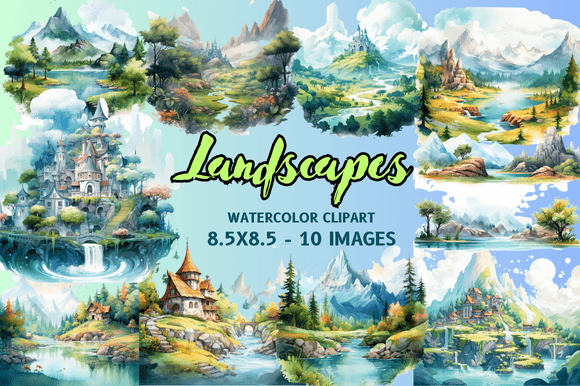
As a digital publisher and blog designer, my first interaction with any new graphic design asset is purely diagnostic. I am not looking at art for art’s sake; I am evaluating whether a visual element can survive the rigors of real-world content marketing. When I opened the Landscapes Watercolor Clipart collection, my immediate assessment focused on editorial utility. The initial impression is one of organic softness and atmospheric depth. Unlike rigid vector graphics or high-contrast photography, these illustrations possess a hand-painted texture that immediately signals authenticity and human touch. For publishers in the travel, wellness, gardening, sustainable living, or creative lifestyle niches, this asset creates an instant emotional bridge with the reader. It feels less like stock content and more like bespoke editorial design, establishing a mood that is both professional and intimately personal.
Elevating Blog Graphics and Featured Images
In a typical publishing workflow, the featured image is the primary driver of click-through rates. Landscapes Watercolor Clipart excels here because it offers negative space naturally within the composition. When designing blog graphics, I often struggle with assets that are too busy to support headline text. These watercolor landscapes, however, feature soft gradients and open skies or foregrounds that serve as perfect canvases for typography. This makes them exceptionally strong candidates for Pinterest pin creation. Pinterest users respond to vertical visuals that feel curated rather than commercial. By layering a bold sans-serif title over these soft landscape backgrounds, you create a visual hierarchy that guides the eye without overwhelming the viewer. The result is a pin that feels native to the platform while maintaining distinct brand identity.
Strategic Applications Across Digital Products
Beyond standard blog posts, this clipart collection demonstrates significant versatility for monetized content streams. As creators increasingly rely on diversified income, having cohesive design assets that work across multiple formats is essential. I found these illustrations particularly effective for:
- Digital Guide Covers: The painterly style adds perceived value to PDF downloads, making them feel like premium resources rather than generic lead magnets.
- Newsletter Headers: Email clients often strip complex formatting, but a simple, evocative watercolor header maintains engagement and sets a calming tone before the text begins.
- Printable Design: For those selling planners or journals, these landscapes serve as beautiful page dividers or cover art that translates well to home printing.
- Canva Template Elements: If you sell templates to other creators, including these unique textures differentiates your products from those using standard library elements.
- Website Header Banners: Used subtly behind navigation menus, they add warmth to minimalist themes without sacrificing readability.
Each application reinforces a consistent visual language, which is critical for building reader trust and recognition over time.
Enhancing Reader Trust Through Visual Consistency
Trust in content marketing is often subconscious. Readers associate polished, consistent aesthetics with authority and reliability. Landscapes Watercolor Clipart supports this by providing a unified stylistic thread across disparate content pieces. When a user moves from a blog post to a lead magnet landing page and then to a social media update, seeing the same artistic style confirms they are still in your ecosystem. This cohesion is vital for affiliate marketing sites where the goal is to recommend products seamlessly. A jarring visual shift can break the narrative flow, whereas these soft, natural illustrations act as a gentle backdrop that keeps the focus on your recommendations while enhancing the overall user experience. The "handmade" quality also combats the sterile feel of AI-generated content, reminding the audience that there is a real person curating this information.
Optimizing for Performance and Accessibility
While the aesthetic value is high, practical implementation requires discipline. Watercolor textures can sometimes result in large file sizes if not managed correctly. Before deploying Landscapes Watercolor Clipart as a hero image or background, always compress the files to ensure fast load times. Web performance directly impacts SEO and bounce rates; a beautiful site that loads slowly will fail regardless of its artistic merit. Furthermore, consider accessibility. Because watercolors rely on subtle color shifts, ensure there is sufficient contrast when placing text over these images. I recommend testing every graphic in grayscale to verify legibility. If the text disappears against the painted background, apply a semi-transparent overlay or restrict text placement to the clearest areas of the composition. This ensures your modern design remains inclusive and functional for all users.
Navigating Licensing and Commercial Use
For digital entrepreneurs and small business owners, understanding the rights associated with a digital download is non-negotiable. Before integrating Landscapes Watercolor Clipart into any monetized project, thoroughly review the commercial license. Clarify whether the license permits use in end products for sale, such as printable design items or paid courses, versus strictly editorial use on free blogs. Some licenses require attribution or prohibit use in logos and trademarked materials. Confirming these details protects your business from legal issues and respects the original artist's work. Additionally, check if the license covers social media graphics used in paid advertising campaigns, as some standard licenses exclude paid ad usage. Proper licensing diligence is a hallmark of professional publishing and ensures your creative marketplace activities remain compliant and sustainable.
Where to Exercise Caution in Layout Design
Despite their versatility, these illustrations are not universally appropriate. I would advise against using Landscapes Watercolor Clipart in highly technical, corporate, or data-heavy environments where precision and stark clarity are paramount. The soft edges and organic forms can undermine messages requiring absolute authority or urgency. Similarly, be cautious with small mobile thumbnails. Intricate watercolor details can turn into muddy blobs when scaled down to 150 pixels wide. Always preview assets at actual display size on multiple devices. In text-heavy blog layouts, avoid placing these illustrations directly adjacent to dense paragraphs without adequate whitespace; the visual weight of the paint can compete with the reading experience. Finally, if your brand identity relies on sharp lines, neon colors, or brutalist aesthetics, this asset may create cognitive dissonance. Design choices must always align with your core message and audience expectations.
Final Publisher Notes on Typography Pairing
The success of Landscapes Watercolor Clipart often hinges on font selection. During my testing, I found that pairing these illustrations with elegant serif fonts enhanced their classic, editorial quality, making them ideal for long-form essays or literary content. Conversely, clean sans-serif typefaces modernized the look, making the assets suitable for tech-adjacent wellness brands or educational platforms. Script fonts worked beautifully for small business branding in the wedding or event planning sectors but risked looking cluttered if the watercolor itself was detailed. Display fonts added personality for seasonal campaigns but required careful kerning to maintain readability against textured backgrounds. Ultimately, treat this clipart as a collaborative partner in your layout. Test combinations rigorously, prioritize user experience over decoration, and let the illustrations serve the content rather than dominate it. When used with intention, Landscapes Watercolor Clipart becomes more than just pretty pictures; it becomes a strategic tool for building a recognizable, trustworthy, and engaging digital presence.