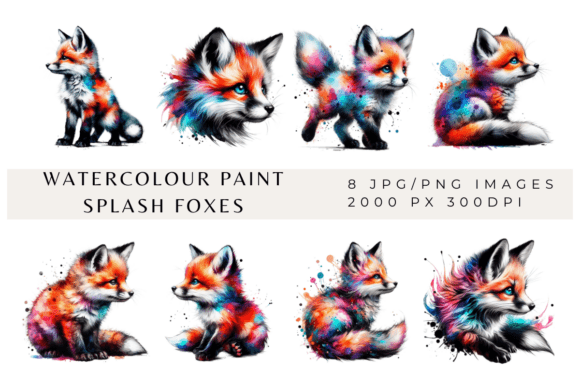
Watercolour Paint Splash Foxes Illustrations Review
When evaluating a new graphic design asset for my Etsy shop and print-on-demand portfolio, I look beyond the initial aesthetic appeal. As digital product creators, we must assess technical viability, commercial versatility, and market fit before investing time in listing creation. My recent review of the Watercolour Paint Splash Foxes collection focused specifically on its potential as a profitable illustration set for the upcoming autumn and winter selling seasons. The first impression is distinct; these are not generic vector foxes but rather expressive, hand-painted illustrations that carry a rustic yet playful mood. This specific visual personality targets a demographic interested in woodland nursery decor, cottagecore aesthetics, and nature-inspired stationery. For sellers targeting moms, teachers, or crafters, this artistic style bridges the gap between childish whimsy and sophisticated watercolor art, making it a strong contender for diverse product lines.
Commercial Viability for Printables and Merchandise
In a real shop scenario, I tested these illustrations across three primary revenue streams: digital downloads, physical merchandise, and editable templates. The high-resolution PNG designs proved immediately valuable for printable wall art. Because the paint splashes have organic edges and varying opacity, they scale beautifully for large-format nursery prints without losing texture integrity. I created a test listing for a set of 8x10 and 11x14 digital downloads, pairing the foxes with neutral beige and sage green backgrounds. The result was a cohesive gallery wall bundle that feels premium rather than clip-art heavy.
For print-on-demand sellers, the transparency quality of these files is critical. I overlaid the fox illustrations on dark navy and forest green t-shirt mockups to check for white halos or jagged edges. The clean cutouts make them excellent candidates for apparel, tote bags, and ceramic mug designs. However, the true value lies in bundling. Rather than selling a single fox image, I found higher perceived value in creating themed collections. Combining the Watercolour Paint Splash Foxes with matching floral elements or wood textures allows for the creation of comprehensive design bundles. These bundles attract Canva template sellers and scrapbookers who need consistent visual assets for multiple projects, thereby increasing the average order value compared to standalone clipart sales.
Optimizing Listings with Strategic Mockups
Visual hierarchy dictates click-through rates in any creative marketplace. When preparing listings for these illustrations, standard flat-lay previews often fail to convey the texture of watercolor paint. I recommend using lifestyle product mockups that mimic real-world application. For example, placing the fox illustration inside a wooden frame on a textured linen background communicates quality far better than a plain white digital preview. This approach builds customer trust by showing exactly how the printable design will look in their home.
Thumbnail appeal is equally important for social media graphics and Pinterest marketing. The vibrant splash details in these fox illustrations provide natural focal points that stop the scroll. I tested several thumbnail variations and found that zooming in on the face and paint texture performed better than showing the entire animal at a distance. This close-up strategy highlights the handmade business aesthetic that buyers associate with higher-quality digital assets. Furthermore, when creating promotional visuals for Instagram or Facebook ads, ensure the color profile remains consistent. Watercolors can sometimes shift during export, so verifying RGB versus CMYK outputs ensures your marketing matches the actual deliverable file.
Technical Considerations for Cricut and Sublimation Users
While these illustrations excel in raster-based applications, crafters using cutting machines require careful evaluation. If you plan to offer an SVG design version for Cricut project users, understand that complex watercolor textures do not translate well to cut lines. The paint splashes create intricate paths that can cause cutting errors or excessive weeding frustration. For this niche, it is safer to market the Watercolour Paint Splash Foxes primarily as sublimation designs or printable stickers rather than vinyl cut files. If an SVG is necessary, simplify the outline significantly and treat the watercolor element as a separate print-then-cut layer.
Resolution is another non-negotiable factor. Before publishing, verify that every file meets the 300 DPI standard at the intended print size. A common pitfall with watercolor assets is upscaling low-resolution sources, which results in pixelated edges that ruin professional packaging design or branding materials. I always perform a test print on both matte and glossy paper to check ink saturation. Watercolors rely on subtle gradients; if your printer cannot reproduce the faintest splash tails, customers may feel the digital download lacks the promised detail. Additionally, confirm the commercial license terms explicitly. Ensure you have the right to use these illustrations in end products for sale, especially if you are modifying them into new composite designs for your small business branding.
Typography Pairings and Layout Best Practices
The success of any illustration often depends on what surrounds it. During my testing phase, I paired the Watercolour Paint Splash Foxes with various typography styles to gauge versatility. Elegant serif fonts complemented the traditional watercolor technique perfectly for wedding invitations and baby shower stationery. Conversely, bold sans-serif display fonts created a modern contrast suitable for children’s book covers or educational flashcards. Handwritten script fonts worked best for greeting cards and personal stationery templates, enhancing the organic, human-made feel of the artwork.
However, sellers should exercise caution with layout density. These illustrations possess significant visual weight due to the saturated paint centers. Placing them in crowded thumbnails or text-heavy templates can overwhelm the viewer. Negative space is your friend here. Allow the fox and its splashes to breathe within the composition. This is particularly relevant for Canva template sellers; pre-designed layouts should include ample whitespace where users can add their own photos or text without competing with the intricate illustration details. By respecting the visual balance, you ensure the asset remains a versatile tool rather than a restrictive decoration.
Seller Checklist for Quality Assurance
Before hitting publish on any listing featuring these assets, run through a practical quality assurance checklist. This step separates amateur shops from established digital product businesses.
- File Organization: Group files logically by format (PNG, JPG, SVG) and theme. Customers appreciate zip folders labeled clearly, such as "Fox_Nursery_Clipart_PNG" rather than generic filenames.
- Transparency Check: Open every PNG in a design program against both black and white backgrounds to ensure no stray pixels or gray fringing exists around the paint splashes.
- Color Consistency: Verify that colors remain vibrant across different devices. What looks warm orange on a calibrated monitor might appear muddy brown on a phone screen; adjust saturation slightly if needed for broader compatibility.
- Licensing Documentation: Include a clear PDF guide explaining usage rights. Specify whether buyers can use the illustrations for physical products, digital templates, or social media graphics to prevent future disputes.
- Mockup Diversity: Create at least five listing images showing different use cases: a framed print, a t-shirt, a digital planner sticker, a greeting card, and a raw file preview.
- Keyword Relevance: Tag listings accurately. Use specific terms like "woodland nursery art," "autumn fox clipart," and "watercolor animal illustration" alongside broader tags to capture both niche and general traffic.
Ultimately, the Watercolour Paint Splash Foxes collection represents a solid investment for sellers focusing on the nature, nursery, and seasonal niches. Its strength lies in its authentic texture and emotional resonance, which translates well to both digital and physical products. By approaching this asset with a strategic mindset—testing technical limits, optimizing presentation, and respecting design principles—you can transform a simple illustration pack into a cornerstone of a profitable creative marketplace shop. Remember that in the digital product space, quality execution matters just as much as the asset itself. Take the time to refine your offerings, and these charming foxes could become a bestseller in your portfolio.