Watercolor Donuts Clipart for Sublimation & Stitch
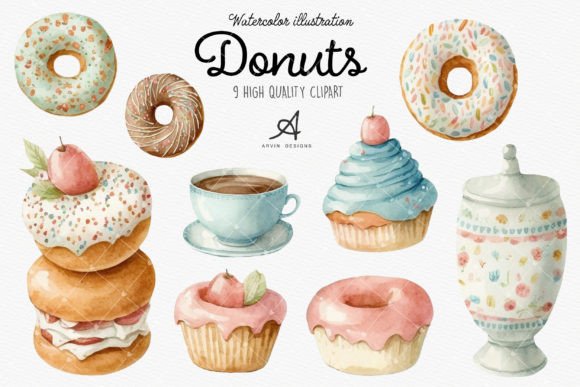
As a designer who bridges the gap between digital assets and tangible textiles, I approach every new graphic with a specific question: will this actually work when thread hits fabric? When I first opened the Watercolor Donuts Clipart, Sublimation files, my immediate reaction was positive but cautious. The aesthetic is undeniably charming, featuring soft edges, playful glazes, and that distinct painted texture that customers currently adore. However, as an embroidery product reviewer, I know that what looks beautiful on a screen requires translation to become a successful machine embroidery design. This collection sits in the Illustrations category, but its true value lies in how we adapt it for physical goods.
First Impressions and Design Personality
The visual mood of these donuts is nostalgic yet modern. They avoid the harsh, vector-sharp lines of traditional clipart, opting instead for organic, bleeding edges typical of real watercolor media. For a handmade product, this is gold. It signals "artisan" rather than "factory-made." When evaluating this for a craft business or Etsy shop, the personality here suggests bakery branding, sweet sixteen parties, baby showers, or cozy kitchen decor. The shapes are rounded and forgiving, which is excellent news for digitizers because curves generally stitch out more smoothly than sharp geometric angles. However, the watercolor effect implies color blending, which presents the primary challenge for any embroidery project intending to replicate the original art.
Real-World Application: The Custom Tote Bag Test
To truly evaluate this asset, I mentally placed it onto a canvas tote bag intended for a local bakery’s merchandise line. Canvas is textured and absorbent, making it a perfect candidate for this style. In this scenario, the Watercolor Donuts Clipart, Sublimation serves as the central focal point. If I were stitching this, I would not attempt to recreate every brushstroke with thread. Instead, I would treat the clipart as a guide for an applique design or a hybrid print-and-stitch method.
For a pure embroidery approach, the soft gradients must be interpreted into distinct thread color blocks. I envision using a fill stitch with reduced density to mimic the airy feel of watercolor, perhaps incorporating variegated threads to capture the glaze variations without excessive stitch count. On a tote bag, this design needs to be bold enough to be seen from a distance but detailed enough to justify the price point of a custom item. The rounded donut shape also allows for easy placement within standard hoop sizes, minimizing re-hooping and alignment headaches during production runs.
Navigating Fabric Choices and Technical Constraints
While versatile, this design demands respect for fabric physics. Here is where practical judgment matters most:
- Textured Fabrics: On tea towels or linen, the watercolor aesthetic shines. The fabric's weave complements the painted look. Use a medium-weight cutaway stabilizer to prevent puckering around the dense glaze areas.
- Stretchy Knits: For sweatshirt embroidery or baby onesies, caution is required. Watercolor designs often require multiple color changes and shading layers, which increases stitch density. On stretchy fabric, this can lead to bulletproofing (stiff, heavy patches). Always test on scrap fabric first and consider using a lighter underlay or simplifying the shading for garments.
- Dark Fabrics: Watercolor is inherently translucent. Digitizing this for black or navy apparel requires a solid white underbase or a complete redesign of the color palette. Without this, the pastel glazes will disappear into the garment.
- Small Hoop Sizes: Avoid shrinking these designs too small. The subtle details that define the watercolor style will turn into muddy blobs if stitched below 3 inches. If you need a tiny logo for a cap or sleeve, simplify the art significantly or use a running stitch outline version instead.
Commercial Viability and Customer Perception
For Etsy sellers and boutique owners, the perceived value of your finished product hinges on execution. Customers associate watercolor styles with high-end, personalized gifts. If the embroidery is too dense or the colors clash, that illusion breaks. Conversely, when executed well, this clipart elevates simple items like pillow covers or aprons into premium giftware.
I also see strong potential for mixed-media creators. Since this is marketed for sublimation, consider printing the full-color watercolor base onto polyester fabric and adding embroidered outlines or text on top. This hybrid technique preserves the artistic integrity of the Watercolor Donuts Clipart, Sublimation while adding the tactile luxury of thread. It reduces stitch count, speeds up production, and results in a vibrant custom apparel piece that stands out at craft fairs. Always verify licensing terms before selling finished items or digital derivatives to ensure your commercial embroidery efforts remain compliant.
Designer Notes for Successful Execution
Before loading this file into your machine, run through this practical checklist to protect your time and materials:
- Check Thread Colors: Do not rely solely on auto-digitizing software to pick colors. Manually select thread colors that blend optically. Place two similar shades next to each other to create depth without adding thousands of extra stitches.
- Review Stitch Density: Watercolor implies lightness. If your digitized file feels stiff, reduce the fill density by 10-15%. This improves drape and prevents needle breaks.
- Test Contrast: Create a black and white mockup of the design. If the donut loses definition without color, your contrast is too low. Adjust values before stitching.
- Stabilizer Strategy: Match stabilizer weight to the design size and fabric type. For these donuts on cotton, a tear-away might suffice, but for knits, a no-show mesh cutaway is non-negotiable.
- Licensing Verification: Confirm whether the license permits commercial use for both physical products and digital design assets. Terms vary widely between illustrators.
- Mockup Testing: Use a printable mockup template to visualize placement on different products before committing to production. This helps identify scaling issues early.
Final Verdict for Makers
The Watercolor Donuts Clipart, Sublimation is a delightful asset with significant potential for the creative entrepreneur. Its strength lies in its emotional resonance and trend relevance. However, success depends entirely on technical adaptation. Treat it as inspiration for a digital embroidery file rather than a direct map. By respecting fabric limitations, managing stitch density, and choosing the right application method, you can transform these digital illustrations into profitable, professional-grade embroidered goods that customers will cherish. Whether you are making a personalized gift for a friend or stocking your shop for the holiday season, this design offers a sweet foundation for creativity, provided you stitch with intention.